
From the team led by Steve Randall, director and lead installerUpdated 26 August 2026
AI overview
The charger itself is rarely the expensive part of installing a commercial EV charging station. Cable distance, switchboard capacity and civil works drive the cost, and the single largest line is often a supply upgrade. Load management, which shares the power the site already has between the chargers, can often avoid it. Ask for an itemised proposal so you can see which line is which.
Key highlights
- Hardware is typically the smaller half of a commercial charging quote
- The distance from the switchboard to the bays often costs more than people expect
- A supply upgrade is the line most worth challenging
- Load management is almost always cheaper than more supply
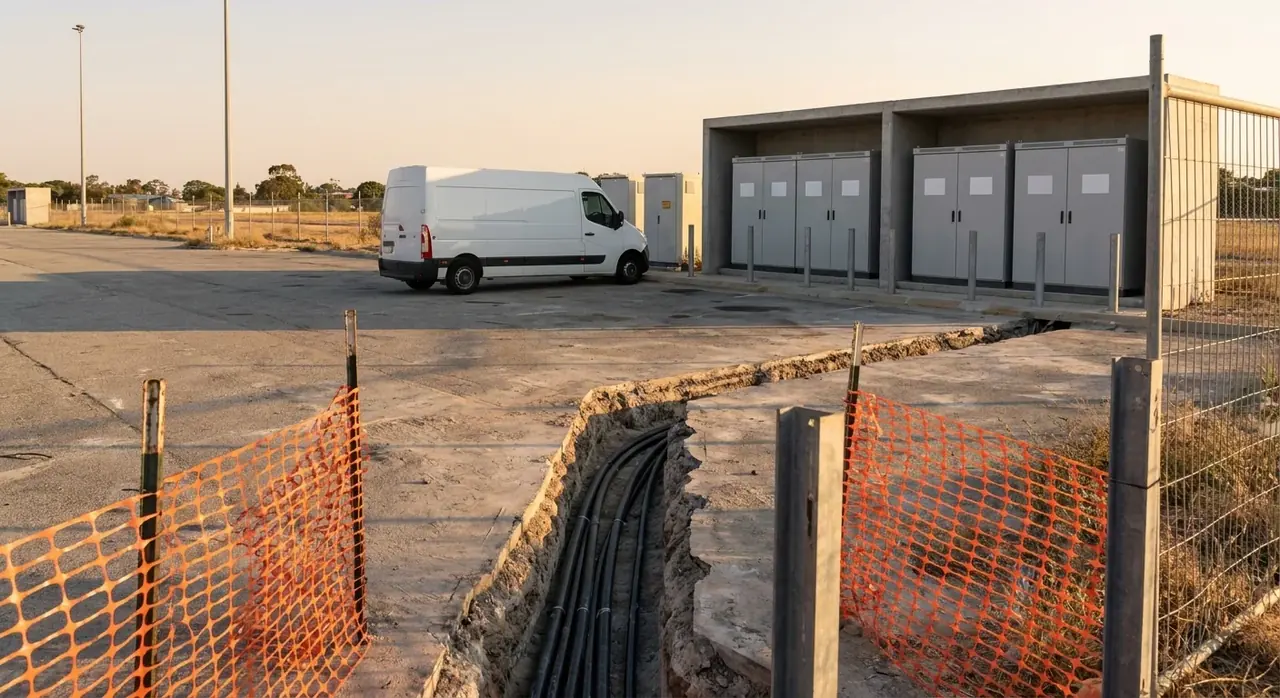
- Trenching and reinstatement can exceed the chargers themselves
- An itemised proposal is the only way to compare two quotes fairly
Why nobody can quote it over the phone
Two identical buildings on the same street can differ by tens of thousands on the same charging brief. Most of that difference is how far the power has to travel and what is between the switchboard and the bays.
That is why a real quote follows a site visit. Until someone has seen your switchboard, any price is a guess, and the final invoice can end up well above it.
The four things that actually set the price
Every commercial charging quote comes down to these four costs.
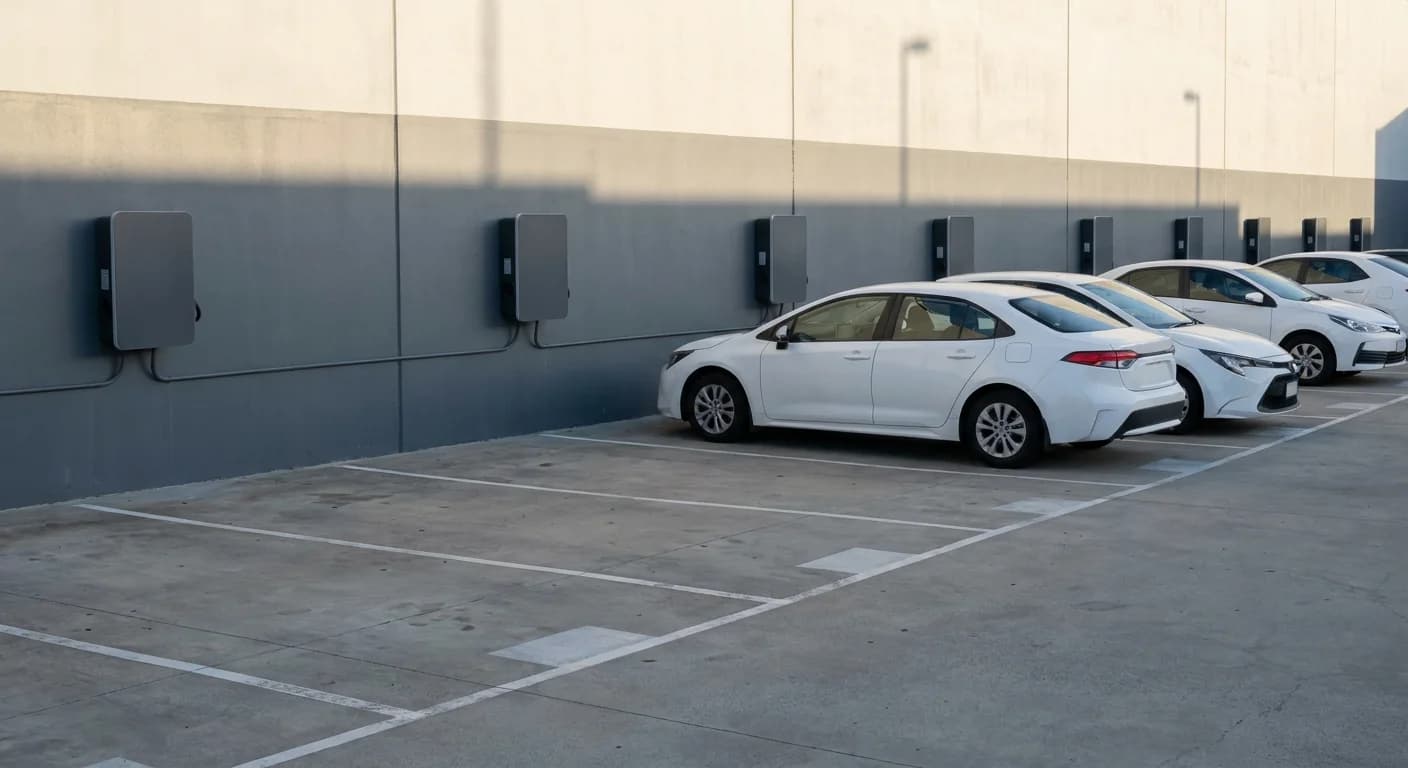
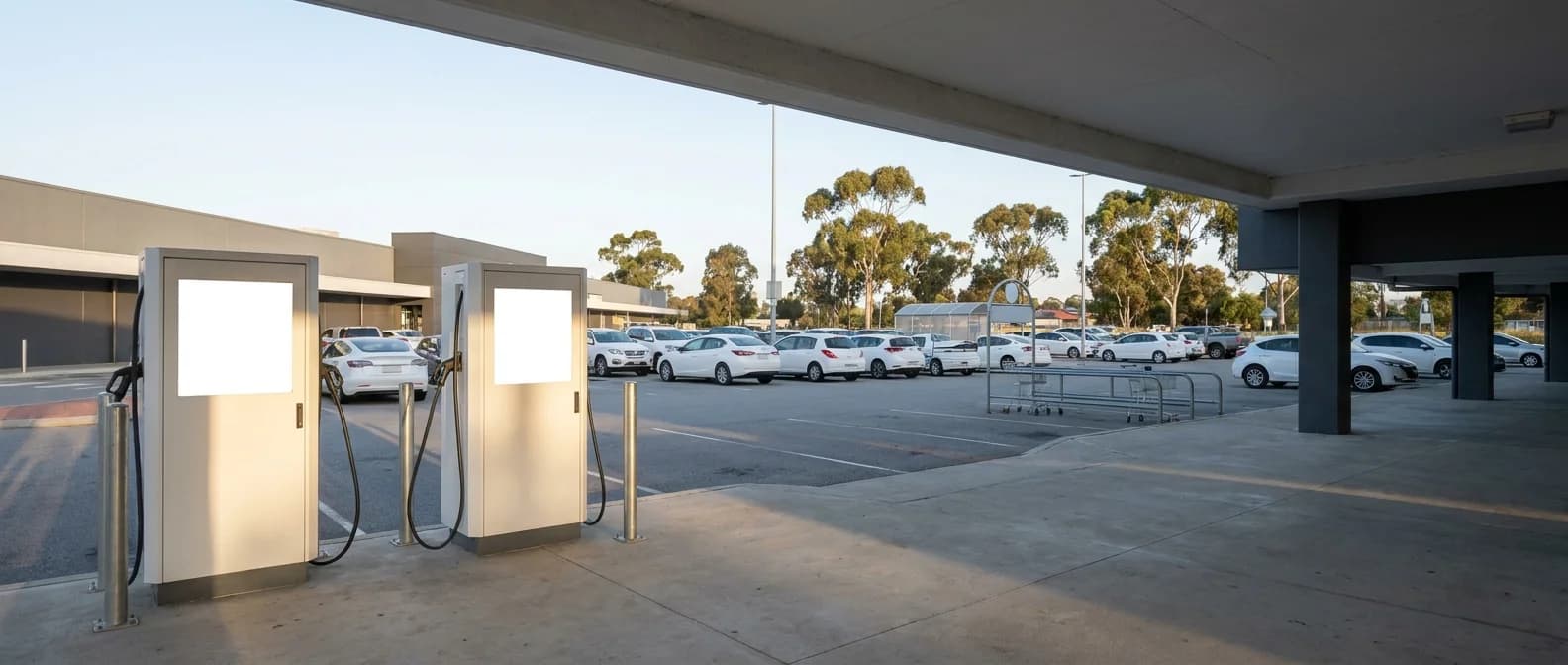
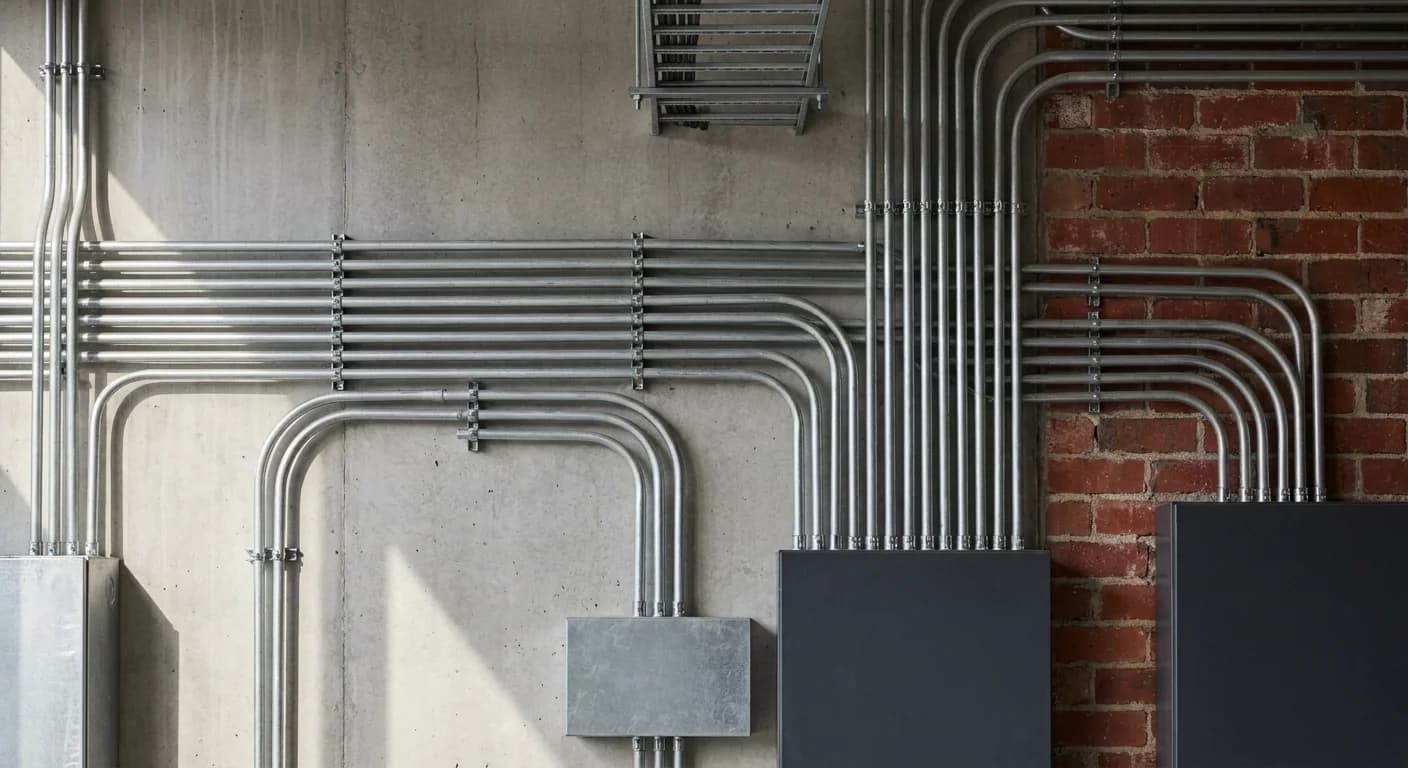
- Cable run. The distance from the board to the bay, and whether it can be surface mounted or has to go underground.
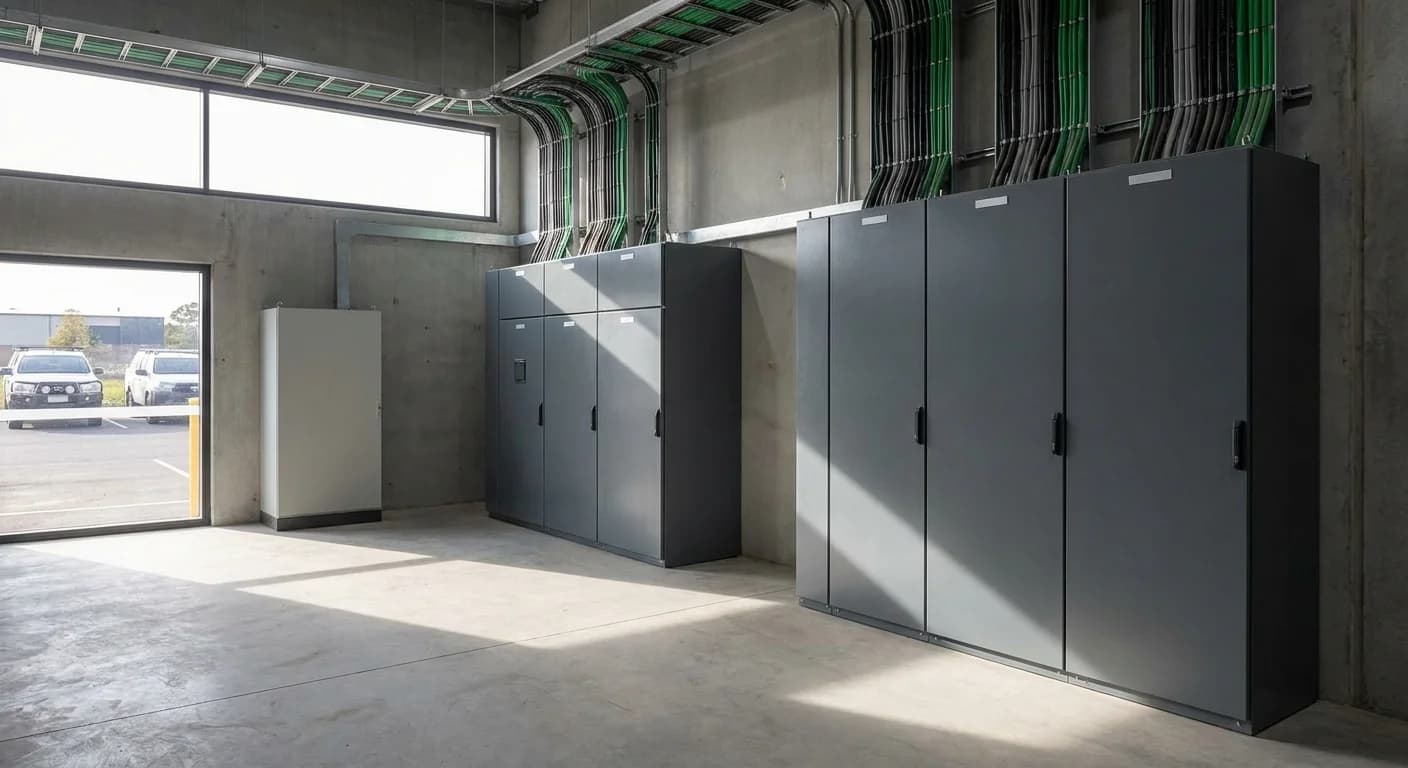
- Switchboard capacity. Whether the switchboard has a spare slot for the new circuit and enough spare capacity, or needs work first.
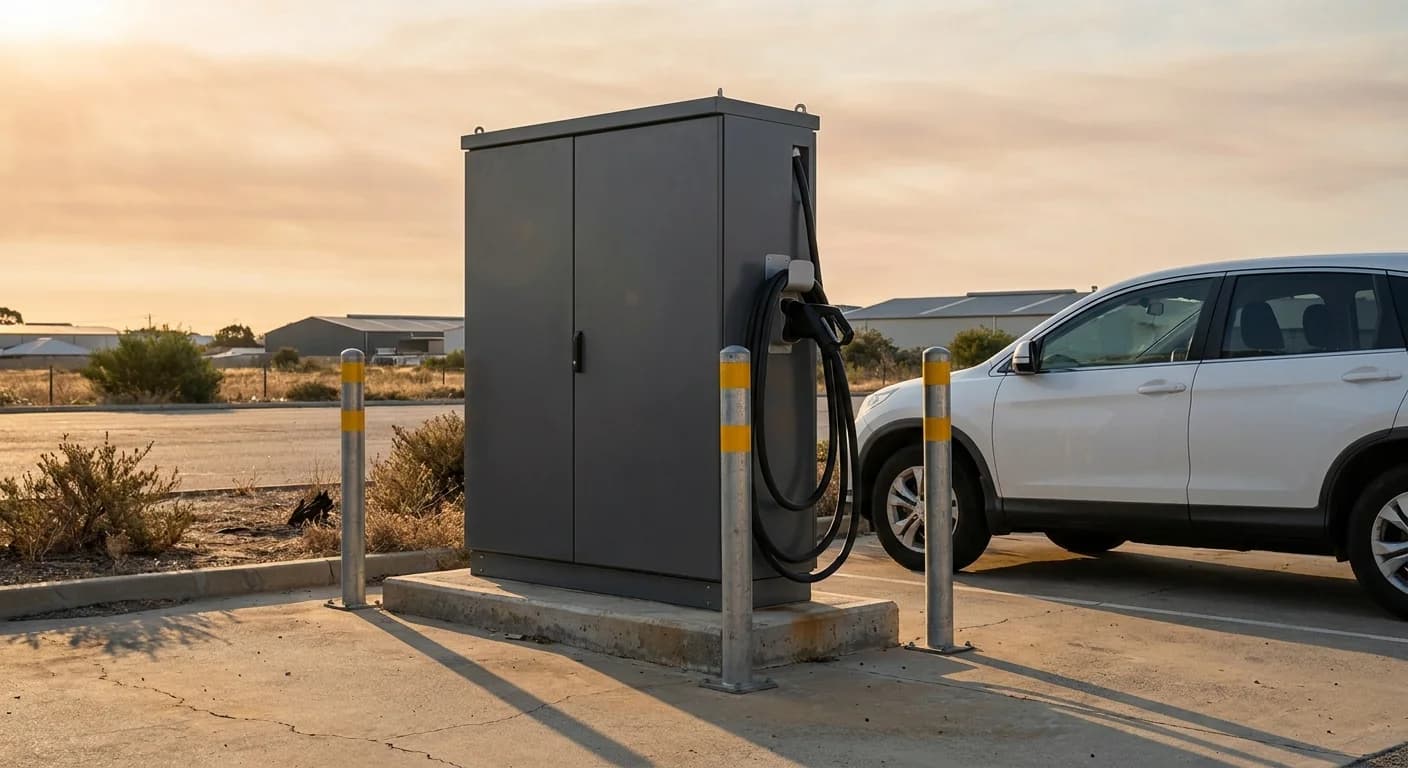
- Civil works. Trenching, cutting concrete, bollards, line marking and repairing the surface afterwards.
- Hardware and software. The chargers themselves, the software licences, and commissioning, which is setting up and testing the chargers once they are in.
The line worth challenging
If a proposal carries a supply upgrade, treat it as a question rather than a conclusion. Upgrading a service is one of the most expensive things you can do to a commercial site, and it is frequently avoidable.
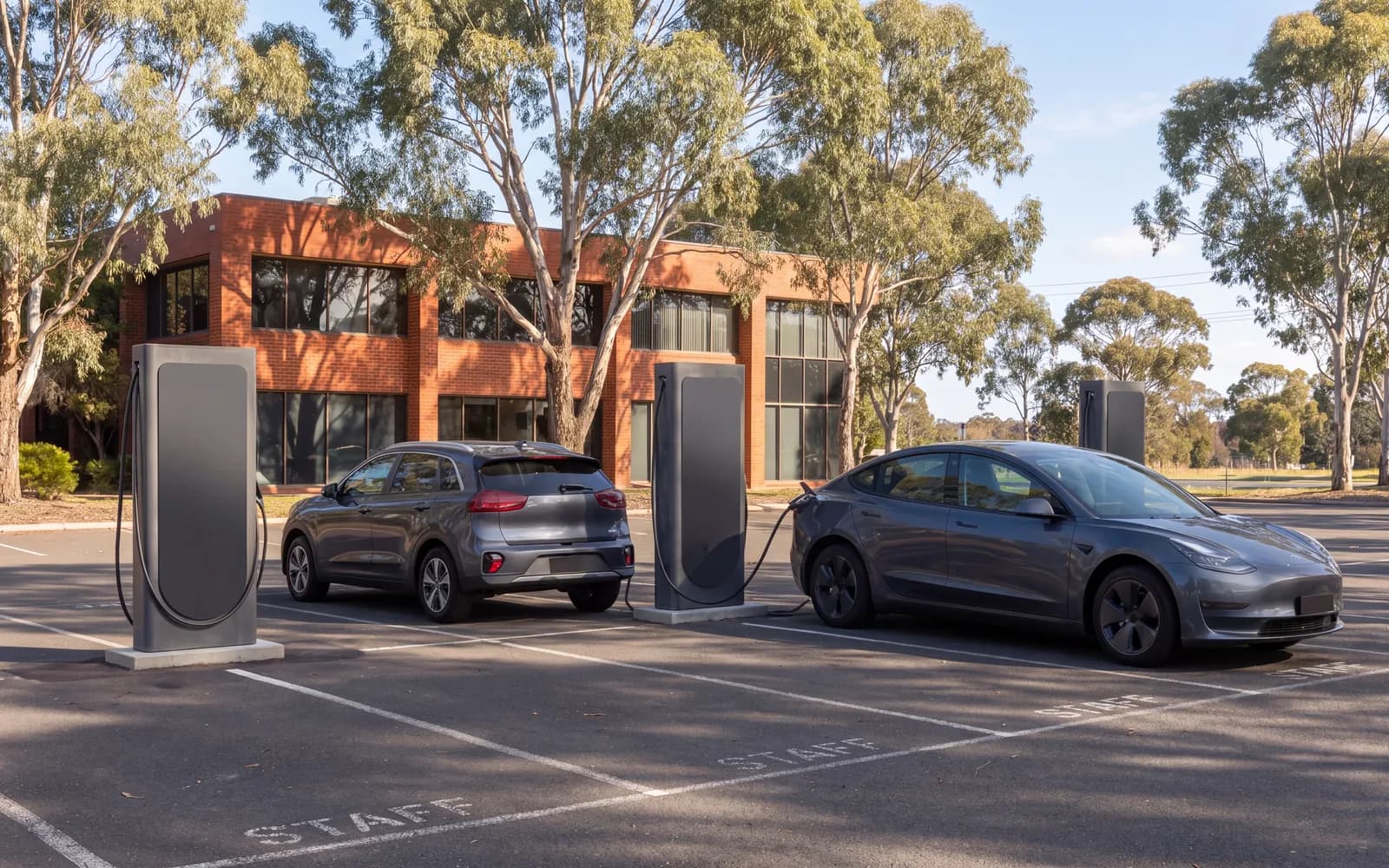
Load management is often the cheaper option. It lets the chargers share the power the site already has, turning down when the building needs more and catching up overnight. Vehicles are usually parked for far longer than they need to charge, so drivers rarely notice.
Before you accept an upgrade, ask whether load management could share the power the site already has. The site assessment should answer that before anyone prices an upgrade.
Where the money is well spent
Spend it on the design first. A backbone, the main cable run that feeds every charging bay, sized for where the site is heading lets you add each future charger without starting a second project.
Then budget for what happens after commissioning. A warranty on parts and labour covers the first couple of years; after that, a yearly service keeps the chargers tested and certified. If your business depends on its chargers every day, budget for that yearly service before you chase a discount on the hardware.
How to compare two quotes fairly
Ask both for an itemised proposal that lists the hardware, the software, the electrical work, the civil works, the timeline, the warranty and the yearly service as separate lines.
Then compare like for like. If one quote assumes cable fixed along a wall and the other assumes a trench, they are pricing two different jobs.
Who leads our team
Steve Randall, director and lead installer
Steve is an electrician and the director of Charging WA, the company behind Commercial EV Charging Perth. He has installed EV chargers across WA for over 10 years.
More about Steve